Before the Close-Up: How Early Cinema Made Faces Readable
Learn how early cinema made faces readable and how close-ups direct attention, so you can tell when a scene emphasizes gesture, reaction, or a telling detail.
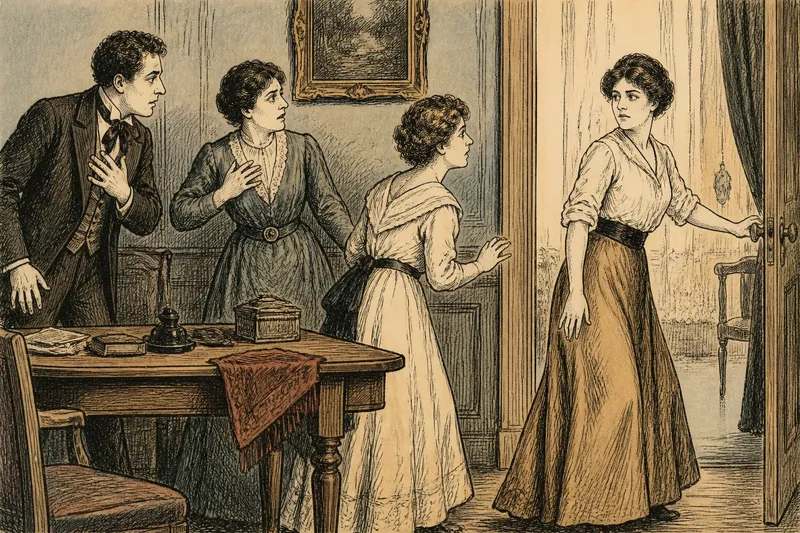
A performer turns toward a doorway while the rest of the cast remains in view. Before the camera singles out a face, the turn, the pause, and the other characters’ responses already shape what we understand. To read close-ups in early cinema, watch how a face shares the frame with bodies, objects, and space.
There was no single moment when filmmakers discovered the close-up and settled on one purpose for it. Framing choices varied across films and scenes. A wider view could keep a performer’s gestures and surroundings legible; a closer view could call attention to a face or a detail. The meaning comes from the choice in context, not from scale alone.
Wide framing makes the whole action visible
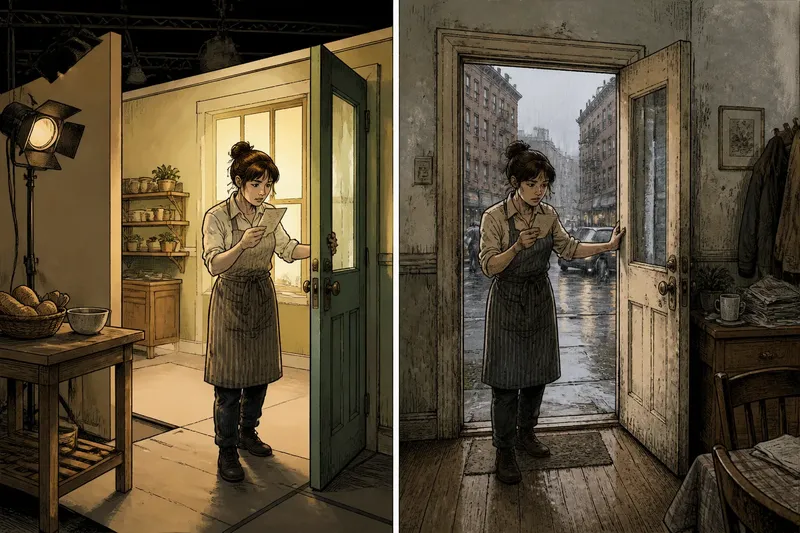
When performers remain in a full-body view, treat the face as part of a larger arrangement. A raised hand, a turn toward a doorway, or a retreat can carry as much meaning as a frown. Some early films use stable compositions that can feel stage-like, with performers moving within a frame that keeps the setting in view.
That distance does not make expression irrelevant. It places expression alongside posture, gesture, costume, and the direction of a glance. The frame is like a window: you see the face, but also the room and the body that help you interpret it.
Notice what stays visible around a face. If the setting and other figures remain prominent, the scene may emphasize a social arrangement as much as a private emotion. A character’s place in the group can be the point.
Gesture can carry emotion across the frame
In a scene built around clear, deliberate movement, look for facial expression working alongside gesture. A hand to the chest, a recoil, a pointed look, or a pause can help an audience follow the action when a face occupies little of the image. These choices connect to theatrical performance, though individual films and performers use them differently.
Rather than treating a large gesture as mere exaggeration, ask what it makes clear. A performer might turn toward a letter, then look toward another person. The movement and the face together can make a discovery legible.
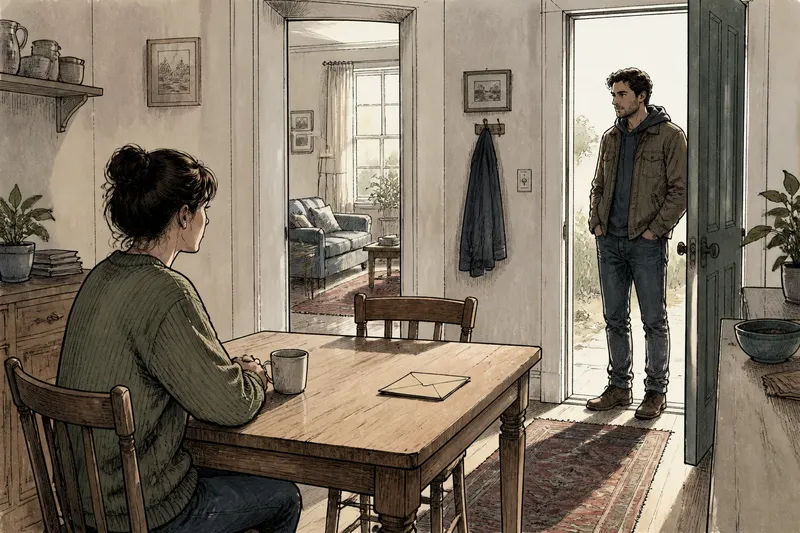
Imagine an invented scene in which a character receives a sealed envelope beside a table. The character grips it, steps back, and looks toward a companion. Those visible actions would let a viewer follow the alarm even if the face remains small in the frame; a close-up is not required for the reaction to register.
A change in scale can redirect attention
If a film cuts from a group view to a face, treat the change itself as part of the storytelling. A close-up removes much of the surrounding context, giving a reaction room to dominate. It can also bring an object into view or make a small detail easier to notice.
Closer views appeared in early cinema for different purposes, and their use developed unevenly. In some scenes, a close view clarifies an object or action. In others, the face becomes the subject and the viewer is invited to attend to a reaction.
Look at what comes before and after the closer view. Does a wider shot establish a person or object first? Does the film return to the larger scene after showing a reaction? A close view that changes what you know or attend to is doing more than simply showing a face at a different size.
Use the scene’s emphasis to read the face
Different scenes invite different readings. Let the visible action guide you rather than treating every close-up as a fixed signal of one emotion.
- If several people share the frame, observe who looks at whom; if their glances connect or conflict, read the expressions in relation to one another, and if they do not, focus on the action or setting that organizes the scene.
- If a performer makes a large gesture, observe whether the face supports the movement; if it does, read the whole-body action as the main cue, and if it does not, attend to the face or another character’s response.
- If the camera moves closer at a turning point, observe what becomes newly visible; if the view reveals a reaction, consider how it marks the moment, and if it clarifies an object or action, read it as practical information as well.
- If a face appears with little surrounding context, observe what the film has shown immediately beforehand; if that supplies a clear cause, connect the expression to it, and if it does not, leave the character’s motive open rather than guessing.
- If an object receives a close view, observe whether a character looks at or handles it; if the action links the object to a decision, consider its narrative importance, and if no such link appears, treat it as a detail without assuming it carries special meaning.
- If an old image looks soft or worn, observe which facial details remain visible; if small features are unclear, base your reading on gesture and framing, and if they are clear, include the expression without assuming every surviving print preserves the original image equally well.
These are reading options, not fixed codes. A close-up does not always suggest intimacy, just as a distant view does not always suggest emotional coldness. The surrounding action shapes the effect.
What should you look for in a close-up?
Why do some early films keep faces at a distance?
A wider composition can show a performer’s full gesture while keeping the setting and other characters visible. The particular scene may depend on those relationships rather than on a single face.
Did early filmmakers use close-ups?
Closer views appear in early cinema, but their purposes vary from scene to scene. A view might clarify a detail or direct attention to a reaction without functioning as a routine emotional cue.
How can you tell whether a close-up is practical or expressive?
Check what the film shows immediately before and after the closer view. If it clarifies an object or action, it supplies practical information; if it singles out a response, it also directs attention to emotion.
Does a close-up always make a character seem intimate?
No. A close view can make someone seem exposed, isolated, or difficult to read. Expression, timing, and the context the film withholds or restores all affect the impression.
Viewing conditions can limit what a face reveals
Early films were made for projection in theaters, and the image a viewer sees today may come from a worn or soft surviving print. Lighting, projection, and image detail can affect how clearly small facial features come through. If an expression seems broad, the image’s condition may limit what you can see; it does not, by itself, tell you everything about the performer’s choices.
Separate observation from interpretation. You can note that the camera holds a full-body view, that a performer turns toward a companion, or that a cut isolates a face. Then consider what those choices do without assuming every film followed the same conventions.
The transition between views gives the clearest clue
Watch how the film moves between scales. A face is not expressive only because it is large; its meaning also depends on the cut that brings it forward and the scene that follows. A sudden close view can interrupt an established rhythm. A return to the wider frame can show how a reaction affects an interaction.
For close-ups in early cinema, start by locating the face in the composition, then follow gesture, gaze, and changes in distance. Ask whether the film makes expression readable through the whole body, a closer view, or both. That sequence helps distinguish a face as part of an action from a face that becomes the scene’s central event.
When the image leaves a motive uncertain, keep that uncertainty in your reading. You can still describe what the frame makes visible and how the shift in scale guides your attention.